Infectious Diseases
Overview
The groups of this area aim to improve the outcomes of patients with infectious diseases. The Epidemiology and Public Health group focuses on the epidemiology and prevention of healthcare acquired infections, transmissible infections and on the new vaccines. The Infectious Diseases group focuses on improving the strategies of clinical problems observed in clinical practice. The Microbiology group studies the mechanisms of antimicrobial resistance, pathogenicity, genomic epidemiology and infectious diseases diagnostics. The CRIPS group focuses on developing translational and clinical research in critical care, while the SODIR group works in the areas of sepsis, organ dysfunction and resuscitation. There is also a group focused on clinical research on children’s infectious diseases and primary immunodeficiencies. Finally, the CIBBIM-Nanomedicine group Works in the synthesis, characterization and applications of engineered inorganic nanoparticles in the field of infectious diseases.
Publications
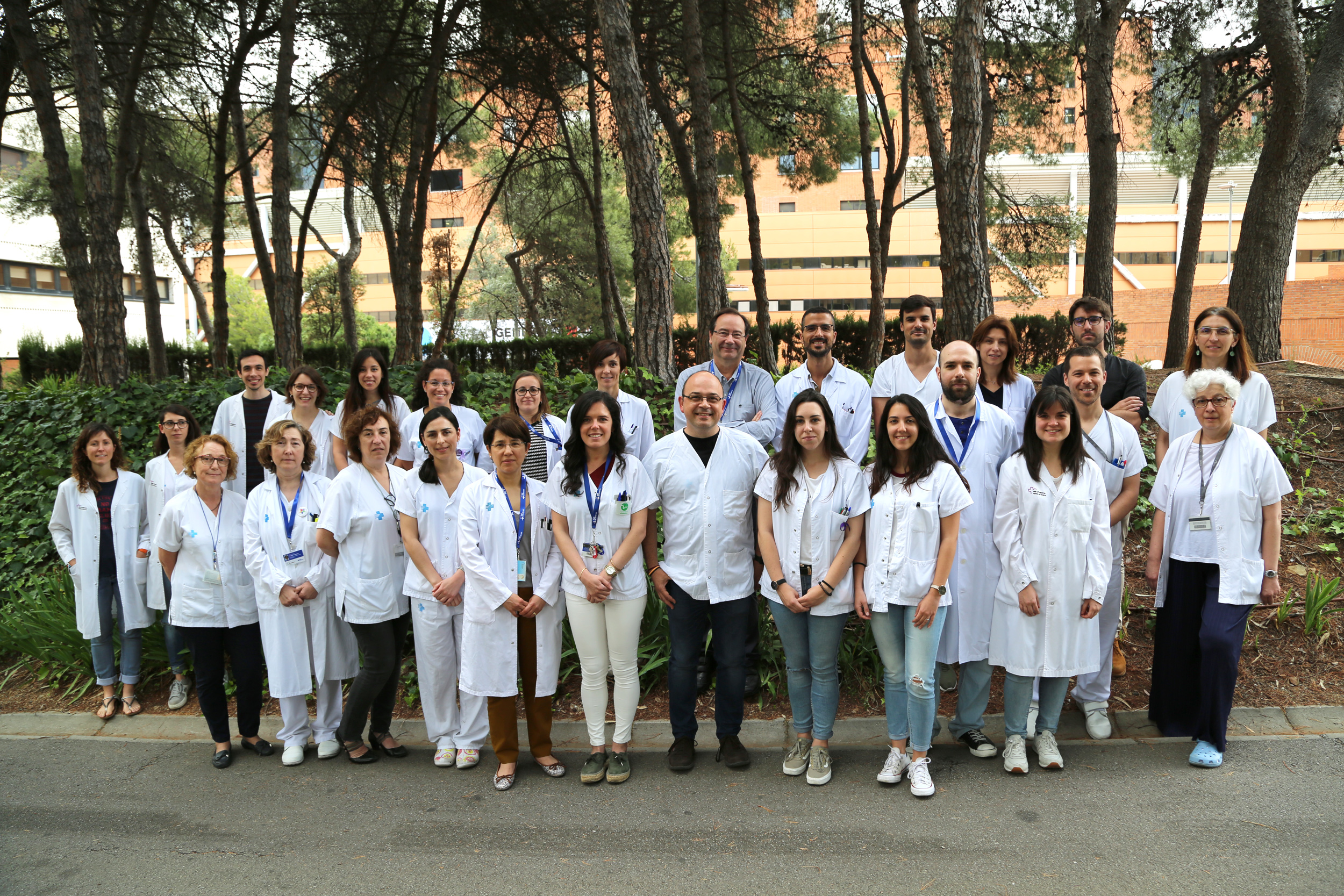
Group Leader: Tomàs Pumarola
Senior Researchers (PI) Andrès Antón, Rosa M. Bartolomé, Juan José González-López, Nieves Larrosa, M. Teresa Martín, Tomàs Pumarola, Judith Serra, Juliana Esperalba, Joan Joseph Munné | Researchers Anna Fàbrega, Mayli Lung, Virginia Rodriguez, M. Belén Viñado, Ariadna Rando, Lidia Goterris, Estrella Caballero, , Elena Sulleiro, M. Teresa Tórtola, Gema Codina, Narcís Saubí, Maykon Tavares | PhD students Albert Moreno, Cristina Andrés, Candela Fernandez, Aroa Silgado, María Piñana, Yoshiki Eto, Alba Mir, Sonia Judith Broner | Lab Technician Thais Cornejo Sánchez